How one health-minded woman used health coaching to improve key lab markers, reduce chronic discomfort, and build sustainable habits for the years ahead.
To protect client privacy, Mimi is a pseudonym, and some identifying details have been changed.
Mimi’s health coaching journey at a glance
Starting point: Rising cholesterol and fasting glucose, low vitamin D and B12, persistent joint discomfort and sinus congestion, and a weight plateau despite long-standing healthy habits.
What we worked on: A personalized health-and-longevity vision, food experiments, movement structure, advance planning, and regular reflection and adjustment.
What changed: Total cholesterol moved from 249 to 173, fasting glucose from 118 to 83, chronic joint pain and sinus congestion eased, and the habits she built became sustainable over time.
When Mimi entered midlife, she wasn’t starting from scratch.
She had exercised for decades, cooked healthy meals, and built a life around caring for the people she loved. Friends considered her disciplined. She considered herself healthy.
Then her body changed.
Menopause arrived quietly but persistently, bringing a new set of challenges. The habits that had carried her through years of running, swimming, cycling, and careful eating suddenly stopped producing the same results. Routine lab work revealed rising cholesterol and blood sugar, vitamin deficiencies, and weight gain that no amount of determination seemed able to reverse.
Her total cholesterol was 249. Her fasting glucose was 118. Vitamin D and B12 were low. “It felt like I couldn’t outrun it anymore,” she recalled.
The numbers didn’t match how she saw herself. More importantly, they didn’t match the future she envisioned. She wanted to remain energetic, independent, and fully present for the people who mattered most. She wasn’t searching for another diet or another fitness challenge. She needed a new approach—one that reflected the realities of a changing body rather than the strategies that had worked 20 years earlier.
Like many women navigating midlife, Mimi discovered that health isn’t static. The rules change, and success often requires letting go of familiar assumptions and strategies.
Starting From Strength
When Mimi began health coaching, she wasn’t looking for someone to rescue her. She already knew how to work hard. Years of athletic pursuits had taught her discipline, and healthy cooking was second nature.
But effort alone was no longer enough. She needed a framework that connected everyday decisions with long-term health. Personal circumstances reinforced that urgency. Watching loved ones face serious health challenges reminded her that good health isn’t simply about feeling well today—it’s about protecting the ability to show up for tomorrow.
Instead of chasing quick results, she committed to something more lasting: building a system she could sustain for years.
In coaching, that meant creating space to step back, notice patterns, and turn good intentions into practical next steps. We began with a simple mission: improve health and longevity. Then we identified the markers that would help Mimi recognize progress—not only in her lab work, but in her daily life.
How was she sleeping? How did her joints feel? Did she have the energy to do the activities she loved? What happened when she planned ahead for a demanding week, travel, or a meaningful event?
Rather than following a rigid plan, Mimi used her own data, symptoms, routines, and lived experience to decide what was worth changing—and what would be sustainable in her real life. The goal wasn’t perfection. It was alignment between the life she wanted and the choices she made each day.
Small Experiments, Big Discoveries
One of the earliest breakthroughs came from curiosity rather than willpower. Instead of following rigid food rules, Mimi began treating nutrition like a series of experiments. She paid close attention to how different foods affected her body.
What she noticed surprised her.
After temporarily removing gluten and dairy, chronic joint pain eased dramatically. Persistent sinus congestion faded. Everyday discomfort that had gradually become “normal” quietly disappeared.
“My life was never the same,” she said.
The experience transformed her relationship with food. Decisions were no longer driven by restriction or guilt; they were guided by direct experience. Once she recognized how certain foods influenced her energy, inflammation, and recovery, healthy choices stopped feeling like sacrifices. They became investments in how she wanted to feel.
That shift changed everything.
Fueling for the Long Run
One idea became the foundation of Mimi’s transformation: she stopped thinking about food as something to avoid and started thinking about it as fuel.
“I need premium fuel,” she said. “If I want my body to last, I have to treat it that way.”
That simple shift changed her relationship with eating. Instead of asking, “Can I have this?” she began asking, “How do I want to feel tomorrow?” The answer made many decisions surprisingly easy.
She stocked her kitchen with foods that supported her energy, reduced inflammation, and helped stabilize her blood sugar. At social events, she no longer felt obligated to eat whatever was available. Sometimes she ate beforehand, sometimes she brought something that worked for her, and sometimes she simply enjoyed the company instead of making food the center of the experience.

“It completely changed how I shop,” she said. “I don’t rely on other people to feed me.”
What had once felt like discipline now felt like self-care.
Building Systems Instead of Relying on Motivation
Food was only part of the equation. Mimi also replaced good intentions with practical systems. Rather than exercising whenever she found the time, she built a year around meaningful milestones that kept her motivated. She planned her training in advance, prepared meals before busy weeks, and anticipated travel or stressful periods instead of reacting to them.
The difference was subtle but important: Motivation comes and goes. Systems remain.
Regular coaching sessions became a place to evaluate what was working, adjust what wasn’t, and stay connected to the bigger picture. We looked ahead, anticipating where life might feel harder, and made plans that supported her rather than asking her to white-knuckle her way through.
Every experiment, whether successful or not, became useful information rather than a reason to give up. Instead of chasing perfection, she learned to expect course corrections.
Progress You Could Measure—and Feel
Over time, the changes became visible in ways that mattered.
Mimi’s total cholesterol first moved from 249 into the low 200s through changes in food and movement. When additional testing showed elevated lipoprotein(a), she chose to add a statin with her medical team’s guidance. Her most recent total cholesterol was 173. Her fasting glucose moved from 118 to 83, and vitamin D and B12 deficiencies were identified and addressed.
Those numbers are meaningful. They reflect a shift in health risks that had once felt discouraging and out of her control. But the laboratory values told only part of the story.
She moved without the joint pain that had once limited her. Chronic sinus congestion faded. She recovered more quickly after exercise and found herself with steadier energy throughout the day. Weight that had resisted years of effort also gradually shifted. More importantly, the changes became sustainable.
She was no longer cycling through temporary interventions or trying to force herself back into a version of health that no longer fit her body. Perhaps the biggest surprise was that maintaining these improvements no longer felt exhausting. The routines she had built were no longer temporary interventions; they had become part of everyday life.
The changes also reached beyond her own health. Meals at home evolved, family members adopted healthier habits, and conversations about longevity became part of daily life. Without intending to, Mimi had become a quiet example of what healthy aging could look like.
She wasn’t pursuing perfection. She was creating a life that made good health easier to sustain than old habits ever had.
More Than a Number on the Scale
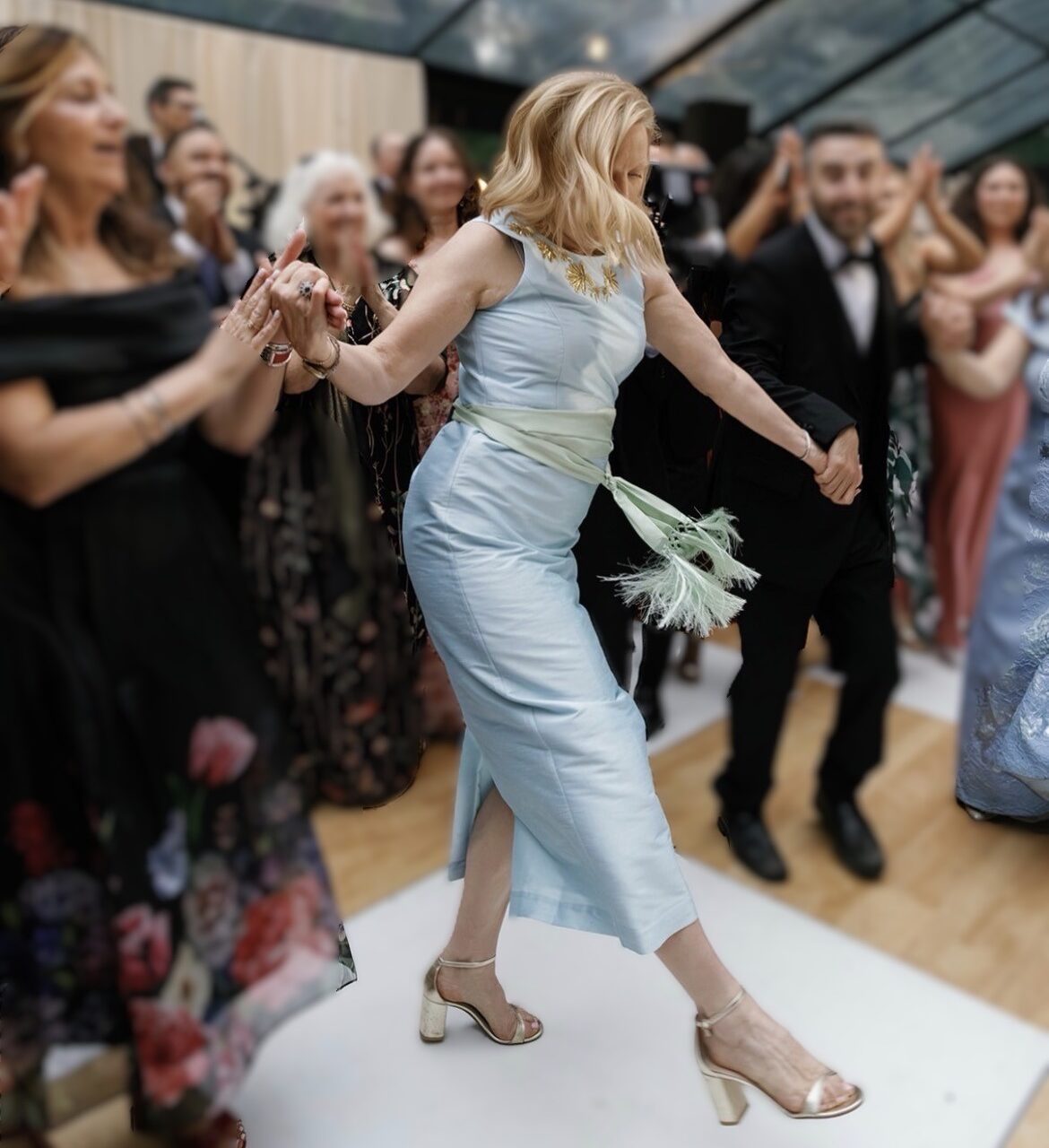
About 18 months into this chapter of her health journey, Mimi reached an important family milestone.
Months earlier, she had made a decision. Instead of focusing on finding the perfect outfit or reaching a specific number on the scale, she wanted to arrive feeling healthy, confident, and fully present. She prepared the same way she had practiced for months: planning ahead, nourishing her body, staying active, and leaning on the systems she had built rather than relying on willpower.
When the day arrived, she wasn’t thinking about calories or restrictions. She was laughing with family, dancing late into the evening, and soaking in moments she knew she would remember for the rest of her life.
“I felt like myself,” she said.
For Mimi, that was the real victory.
The healthier lab values, reduced inflammation, and more sustainable weight all mattered. But they were never the destination. They were the byproducts of creating a life that supported the person she wanted to become.
What She Wants Other Women to Know
Looking back, Mimi believes the most important lesson has little to do with food.
It’s about paying attention.
Our bodies change. What worked in our thirties may no longer work in our fifties. Ignoring those changes doesn’t stop them from happening, but responding with curiosity instead of frustration can open the door to entirely new possibilities.

She encourages women to seek support before they feel desperate, to view health as one of their most valuable assets, and to remember that small, consistent actions often accomplish what dramatic overhauls cannot.
She also encourages women to build their toolkit early: different ways to move, prepare nourishing food, navigate stress, and seek support. And if those skills are not yet in place, she is equally clear that it is never too late to begin.
Perhaps most importantly, she hopes women stop seeing midlife as the beginning of decline.
Instead, she sees it as an invitation.
An invitation to become more intentional, more informed, and more compassionate toward themselves.
Aging With Intention
Today, Mimi no longer measures success by a single lab report or the number on the scale. She measures it by how she lives.
She moves without pain. She has the energy to do the things she loves. She feels prepared rather than overwhelmed by life’s busiest seasons. And she knows the choices she makes today are shaping the years ahead.
Healthy aging, she has discovered, isn’t about turning back the clock. It’s about building habits that allow you to keep showing up—for your work, your family, your passions, and yourself.
The greatest transformation wasn’t simply physical.
It was learning to trust her body again.
And perhaps that’s the quiet promise of midlife: not that everything is easy, but that wisdom begins to replace willpower. Health becomes less about chasing perfection and more about making choices that honor the life you want to live.
For Mimi, aging with intention isn’t a finish line.
It’s simply the way she moves forward.
If Mimi’s story feels familiar, you do not have to figure it out alone. Together, we can make space for curiosity, uncover the patterns that matter, and create a practical path toward feeling stronger, clearer, and more at home in your body.
This story reflects one client’s individual experience and is shared with permission. Health coaching is not medical care and does not replace diagnosis, treatment, or guidance from your licensed healthcare providers.